

This week I have a strong hate for AI in Design…
Okay, maybe hate is a strong word.
I love what AI can do. I love how quickly it can help us solve problems, create things, visualize ideas and make our lives easier.
But there’s one place where I’m starting to really become frustrated with it:
Design.
I love design. I love beautiful spaces. I love architecture, furniture, art, materials, colour, texture and all of the weird little details that make a space feel like someone actually lives there.
I love scrolling Instagram and Pinterest and discovering a designer I've never heard of. I love seeing a house where someone took a risk. A weird piece of furniture. A strange colour combination. A room that isn't perfectly balanced but somehow works.
That is how I get inspired.
Or, at least, that is how I used to get inspired.
Because now, I can barely scroll through Instagram, Pinterest or even Google without seeing AI-generated spaces.
And once you start noticing it, you can't unsee it.
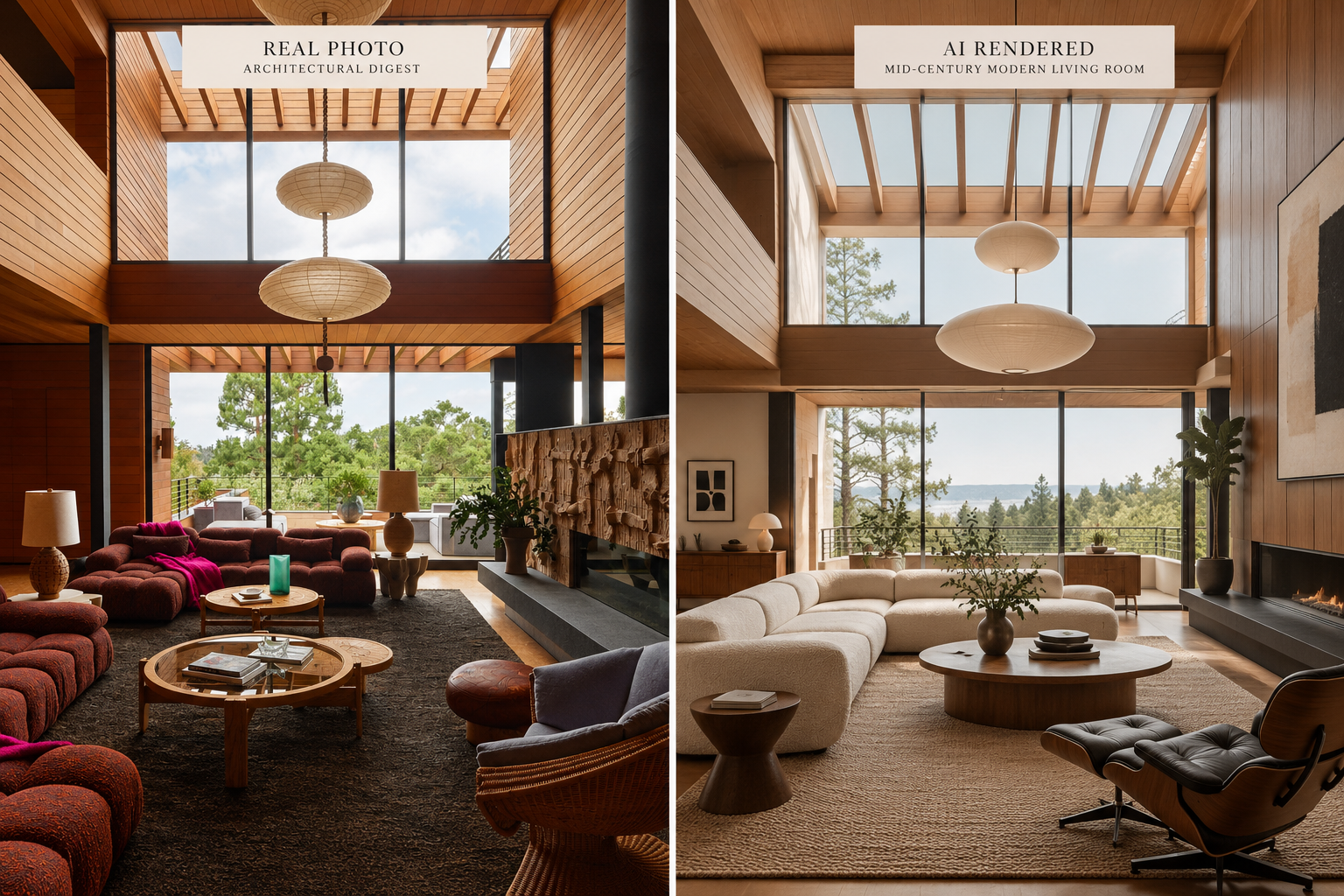
The same artwork.
The same oversized curved sofa.
The same perfectly sculptural coffee table.
The same soft, neutral colour palette.
The same painted walls.
The same perfectly placed books and vases and branches that somehow look like they have never actually been touched by a human being.
And maybe that's the part that bothers me most.
It's all starting to look the same.
I'm not seeing designers anymore. I'm seeing a version of what the internet has decided design is supposed to look like.
And there is another problem with it that I think gets overlooked:
AI doesn't actually understand the space.
It understands the image of a beautiful room.
Those are two very different things.
Show me an AI-generated bedroom and it might create the most beautiful bedroom you've ever seen. The proportions look perfect. The furniture fits perfectly. The bed is exactly the right size for the room.
Except… maybe it isn't.
Maybe that "queen-size" bed would leave you with 14 inches of clearance beside the dresser.
Maybe that gorgeous sofa would never make it around the corner of the staircase.
Maybe that dining table seats eight people beautifully in the image, but in real life you'd have to move it every time someone wanted to sit down.
Real designers have to think about those things.
They have to understand scale. Light. Materials. How people actually move through a space. What happens when you put a 9-foot sofa in a 12-foot room.
They have to make decisions.
And sometimes those decisions are what make a space interesting.
That's what I don't want to lose.
I don't want a world where we stop being inspired by artists because a computer can produce something that gets more likes.
I don't want to stop discovering designers because the algorithm has figured out exactly which beige living room I'm most likely to save.
And I definitely don't want our creative reference point to become other AI-generated images of things that were already generated by AI.
Because where does the originality come from then?
I don't think the answer is to stop using AI.
Honestly, that's impossible.
I think the answer is to be more intentional about where we're finding our inspiration.
Go see the house.
Go to the gallery.
Buy the weird chair.
Follow the designer whose work doesn't look like everyone else's.
Visit a showroom.
Look at actual architecture.
Talk to artists.
Take photos of spaces you love.
Make something badly before you ask a computer to make it beautifully.
Because creativity is a muscle.
And I don't want us to outsource the muscle just because the machine is really good at making the finished product look pretty.
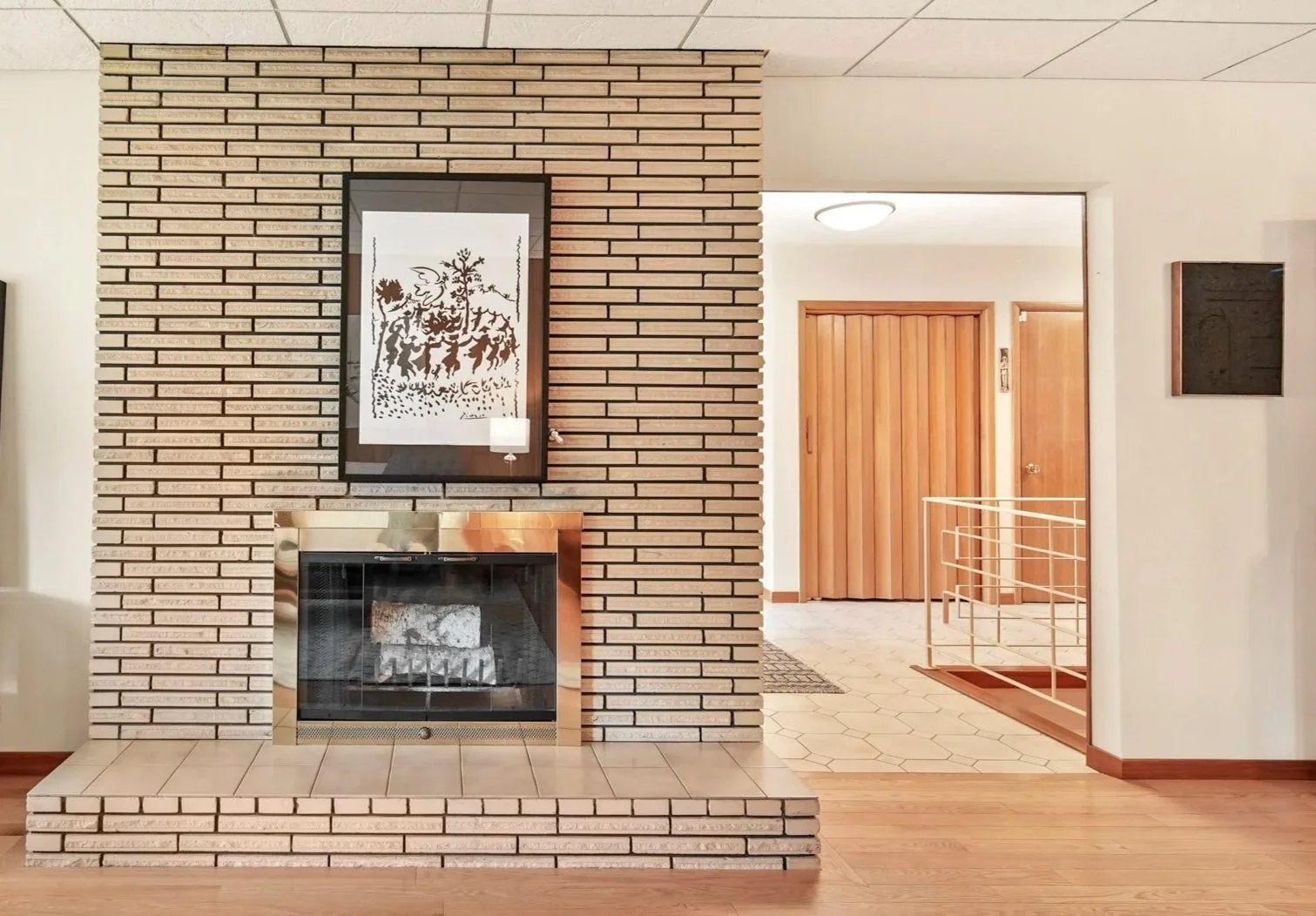
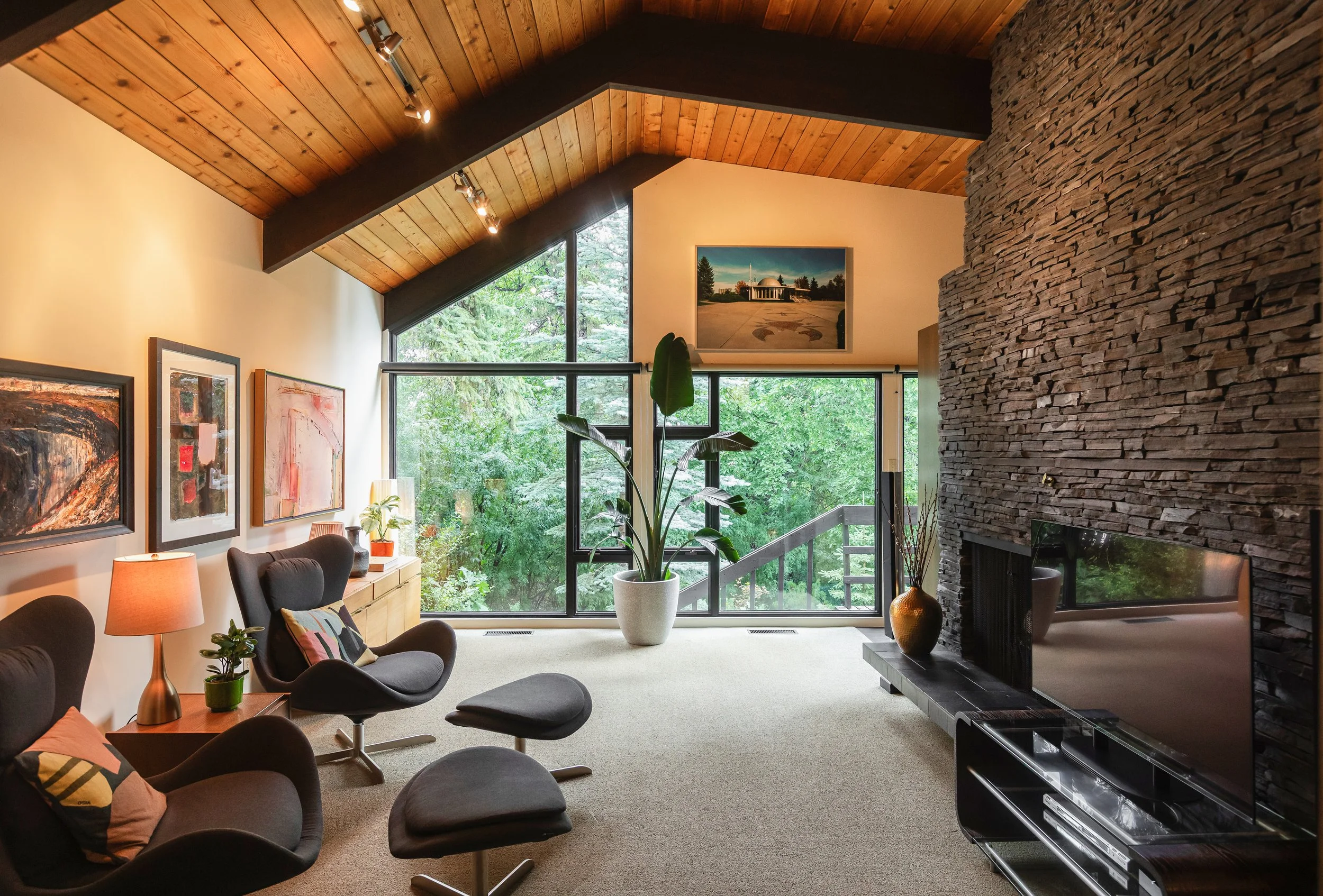
So, in the spirit of this little rant, I've put together a few images.
The first are spaces designed by real professionals — local and non-local.
And then there are some AI-generated spaces.
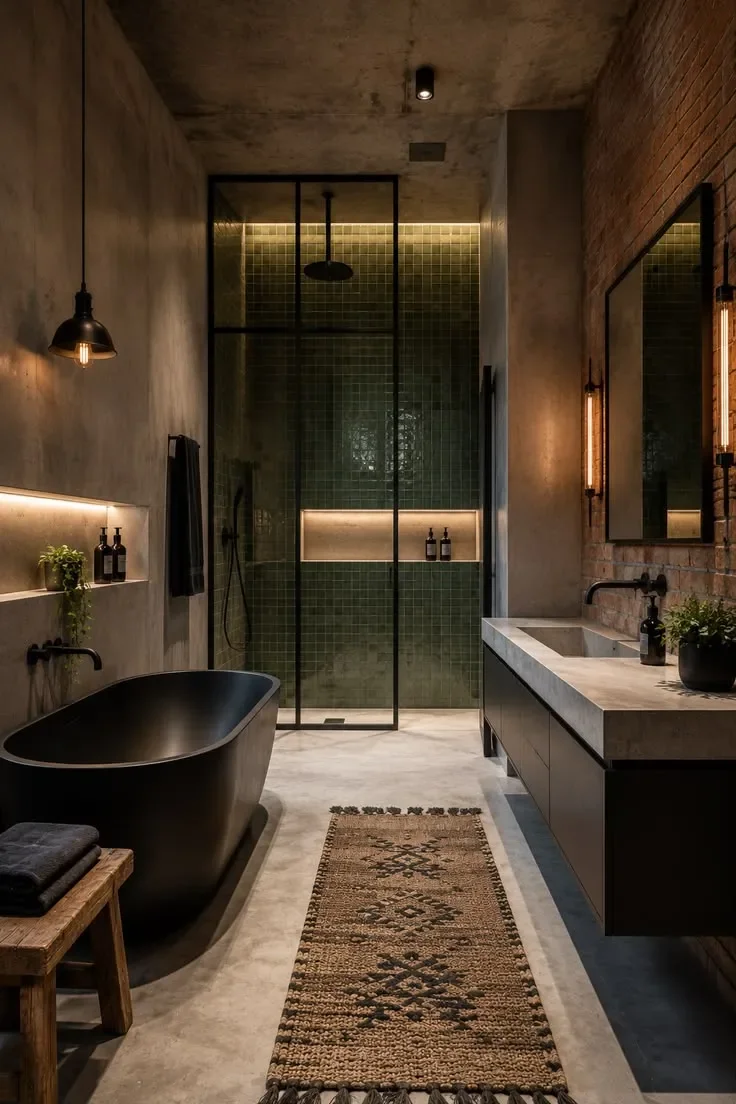
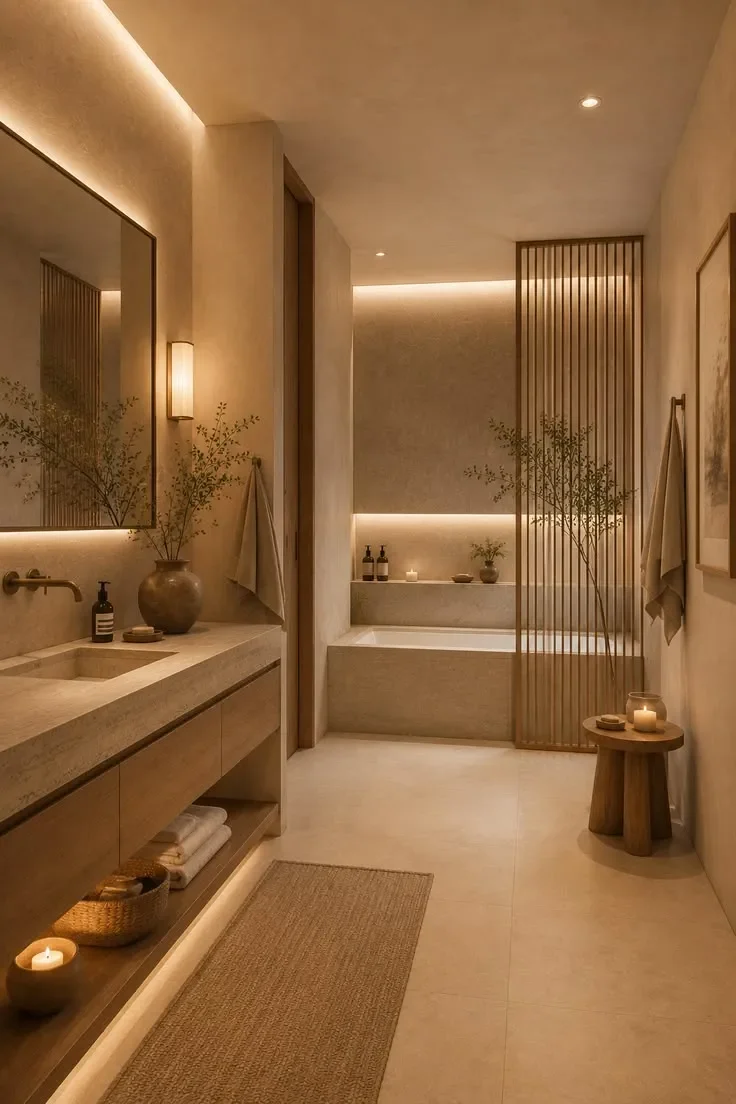
Can you tell the difference?
And more importantly…
Does it matter to you?